
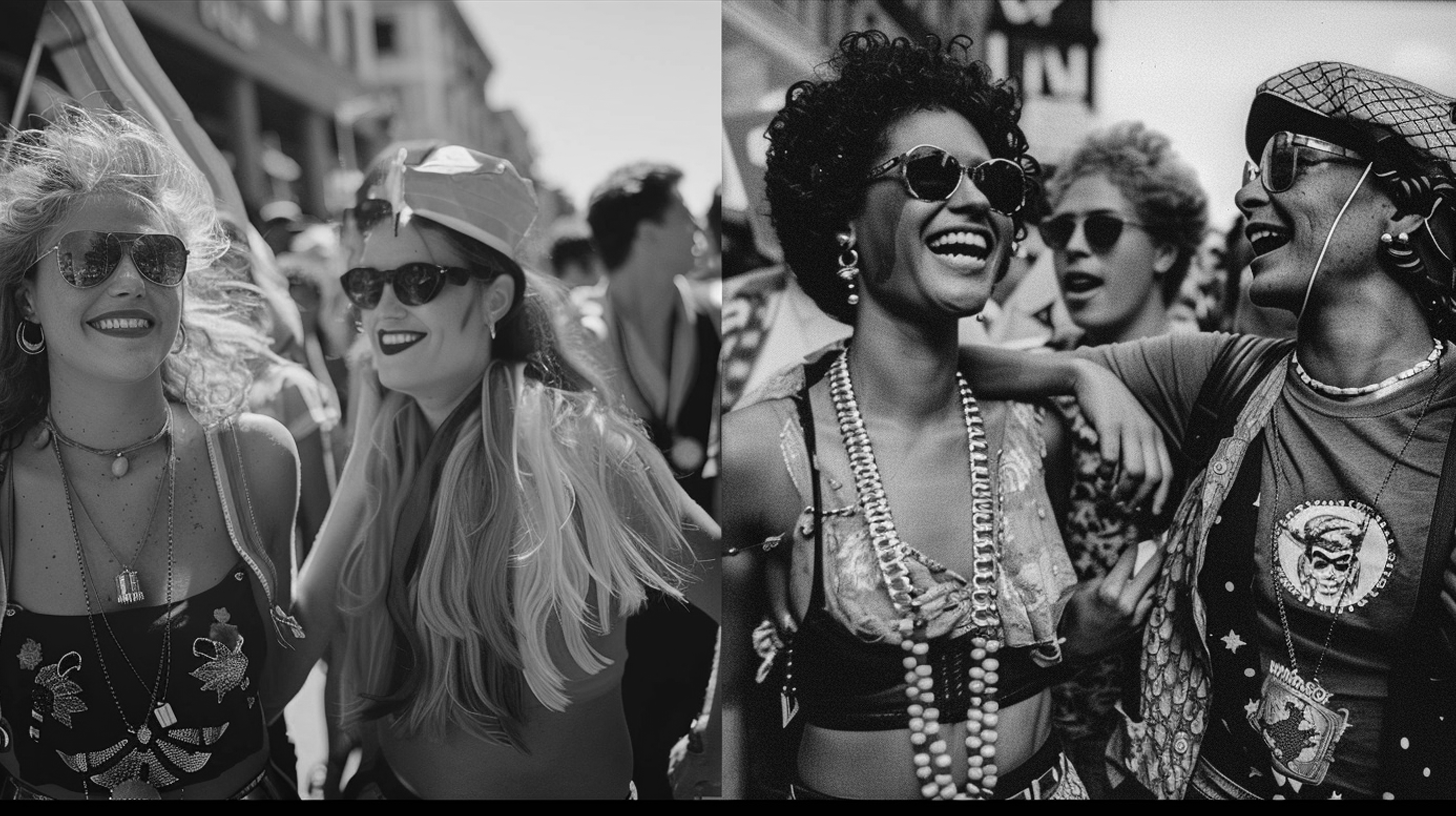
The Fine Line Between Allies and Accomplices
There’s a moment that happens sometimes when I’m at a concert (yes – awake after 9pm!). The artist says something vaguely supportive about queer people, and the crowd erupts in self-congratulatory cheers. How lovely for everyone.
A conversation recently with Jon Ginoli revealed that Green Day had asked his band Pansy Division to support them at a time when the HIV/AIDS crisis made much of the world rabidly homophobic. Not just slightly uncomfortable—rabidly homophobic. And it got me thinking about the critical distinction between being an ally and being an accomplice.
An ally stands beside you. An accomplice gets into trouble with you.
I’m interested in artists willing to risk something substantial—popularity, profit, peace of mind—to stand with queer people. Not when it’s fashionable or financially rewarding, but when it costs them something real. And for Green Day, I really think it could have done.
The Risk-Takers
In the 1980s, when AIDS was decimating queer communities and much of the entertainment industry responded with deafening silence, certain artists made choices that transcended mere allyship. They used their platforms when it was downright dangerous, putting their careers on the chopping block.
Take Madonna, who time and again in interviews, concerts, and photo sessions, said a resounding “fuck you” to HIV/AIDS shame and stigma. And this wasn’t last week—this was in the 1980s, right in the eye of the bloody storm.
Her support wasn’t rainbow logos or mealy-mouthed statements. It was naming the problem explicitly, directing actual resources, and challenging the systems that allowed a virus to morph into a moral judgment.
This is the stark difference between performance and practice. Between mouthing supportive platitudes and taking actions that might cost you something.
The Comfortable Middle
The trouble is, we now live in an era where queer-supportive language has been thoroughly co-opted by marketing departments with MBAs. Rainbow washing has made it nearly impossible to distinguish between meaningful solidarity and profitable posturing.
And I get it—it’s comfortable to loiter in the middle. To make statements just progressive enough to placate liberal audiences but not so radical that you alienate the conservatives who also buy tickets. To include queer people in your work, but in ways that can be neatly excised for certain markets. Saudi Arabia didn’t like your queer character? No problem, we’ll just cut that bit.
But art isn’t supposed to be comfortable, is it? It’s supposed to tell the truth, even when—especially when—that truth is complicated or challenges someone’s worldview.
The New Accomplices
What does being an accomplice mean in 2025? It means recognising that despite surface-level progress, the substantive work isn’t even close to done. I have enormous respect for Olly Alexander at last year’s Eurovision, presenting a feverishly queer song on the international stage just as certain segments of society were properly foaming at the mouth about trans rights.
This loud, unapologetic presence means artists using their platforms to challenge the ongoing marginalisation of trans people. It means refusing to play in venues or work with companies that support anti-LGBTQ+ legislation. It means insisting that queer storylines remain intact across all markets, even if it means losing distribution in regions where censors sharpen their scissors.
And perhaps most importantly, it means making space for queer artists to tell their own stories rather than speaking for them, or worse—speaking over them.
The Personal Cost
Being an accomplice invariably comes with criticism. You’ll be told you’re being “too political” or “dividing your audience.” You’ll be accused of “virtue signalling” or “jumping on a bandwagon.” The comments section will be a cesspit.
But real art has always been political. It has always questioned the status quo, challenged power, and imagined better worlds. In fact, life is political. Full stop. Our rights (and lack thereof) are enabled or constrained by politics.
The best artists understand this intuitively. They know their work doesn’t exist in a vacuum—it either reinforces or challenges existing power structures. There’s no neutral position. And the same goes for Eurovision. Arguments that it is apolitical are absolute bollocks. Tell that to the Ukraine broadcaster Suspilne providing commentary from a bunker.
The Choice
Every artist faces a choice: Will you use your platform to comfort the comfortable, or will you risk something to stand with those still fighting for basic dignity and safety?
Will you be an ally who offers supportive words from a safe distance, or will you be an accomplice who gets into necessary trouble?
The history of art is full of people who made both choices. I know which ones I remember. I know which ones changed me. I know which ones I still listen to. And I suspect you do too.
If you liked Olly’s song you might enjoy Bright Light Bright Light.
Find the podcast on Apple, Spotify, or wherever you get your podcasts.
Follow us on Instagram, TikTok, and Facebook.
And don’t forget to check out the official podcast playlist on Spotify.
Leave a Reply