
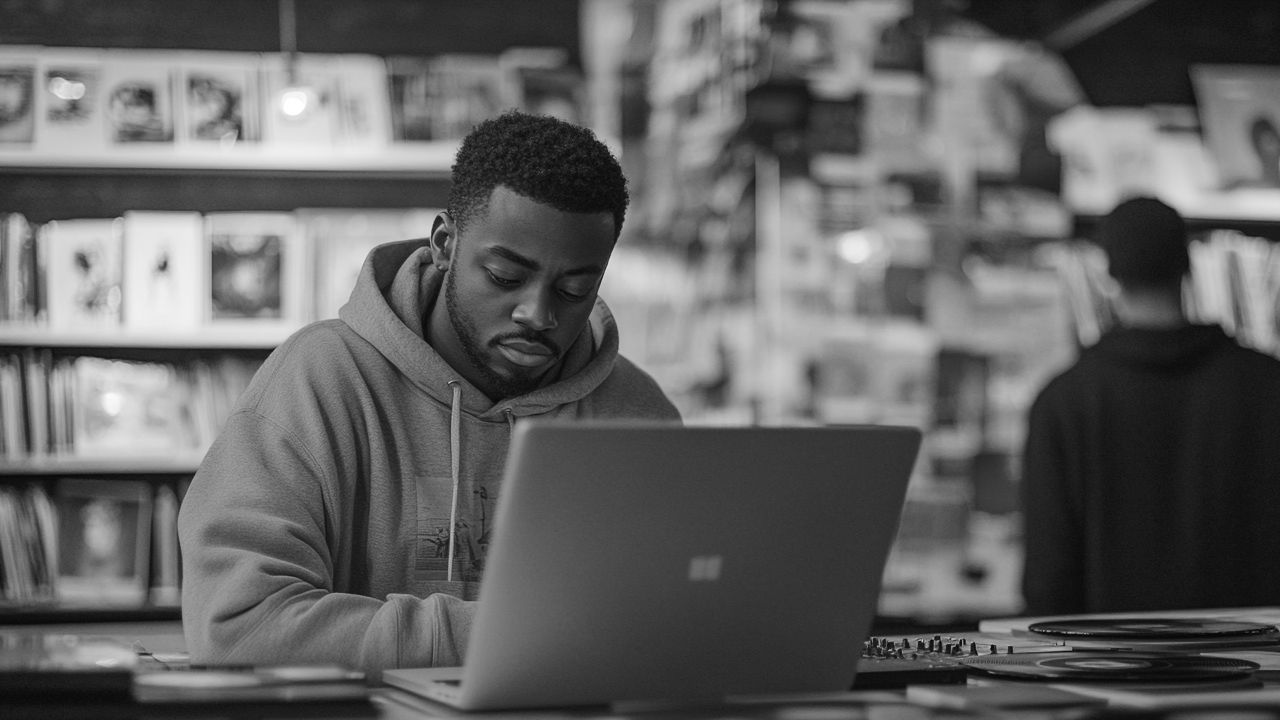
My conversation with Carrington Kelso left me realising I’d been part of a big problem for many years. Albeit accidentally. For years, I’ve congratulated myself on discovering independent queer artists, adding them to my carefully curated playlists, streaming their albums religiously. I thought I was supporting them.
I was wrong.
The revelation that streaming a song 200 times might net an artist the equivalent of a cup of coffee sent me down a rabbit hole of research that fundamentally changed how I understand artistic sustainability in the digital age. What I discovered is a system so fundamentally broken that it’s a miracle any independent artist survives it.
The Streaming Mirage
The mathematics of streaming economics are deliberately obscured, but the basic truth is stark. Spotify pays between £0.0015 and £0.003 per stream, with the lower figure being more common for independent artists. To put this in perspective, an artist needs roughly 4,000 streams to earn what they’d make from selling a single album traditionally.
But it gets worse. Those payments don’t go directly to artists based on their individual stream counts. Instead, streaming services pool all subscription revenue and distribute it based on market share. This means that even if you only listen to Carrington Kelso for an entire month, your subscription fee is still divvied up among Taylor Swift, Drake, and whoever else dominates the charts.
“If you pay £10 a month on Spotify and you only listen to Carrington Kelso that whole month, Spotify doesn’t send me that £10” – Carrington Kelso
The Algorithmic Gatekeepers
Streaming platforms use algorithmic recommendations that favour artists with existing major label support and marketing budgets. The “Discover Weekly” and “Release Radar” features that we rely on to find new music are biased toward artists who can afford playlist placement and promotional campaigns.
Artists with initial advantages get more algorithmic support, which leads to more streams, which reinforces their algorithmic advantage. Independent artists are fighting an uphill battle against systems designed to amplify those who are already loud.
This creates what economists call a “superstar effect” in which a tiny percentage of artists capture the vast majority of revenue while everyone else fights for scraps. In the streaming era, this effect has become more pronounced, not less.
Alternative Economies
The good news is that alternatives exist, and some artists are finding creative ways to build sustainable careers outside the streaming trap. Bandcamp, which allows artists to set their own prices and keeps a smaller commission, has become a lifeline for many independent musicians. The platform reported that fans paid artists £142 million in 2023, significantly more per purchase than streaming equivalents.
Patreon and similar subscription services allow artists to build direct relationships with supporters. The intimacy of direct support creates stronger bonds between artists and fans while providing predictable income.
LiveStreaming concerts, especially during the pandemic, opened new revenue streams that bypass traditional gatekeepers entirely. Artists can perform directly for their audiences, sell merchandise, and build community simultaneously.
The Responsibility of Fandom
This research forced me to confront an uncomfortable truth about my own consumption habits. I’d been treating music like a utility by paying my monthly subscription fee and assuming that was enough. But if I spend £6 on a pint at my local pub, why do I balk at spending the same amount on an album I’ll listen to for years?
The shift requires reframing how we think about musical value. We need to move from the all-you-can-eat streaming model back to intentional purchasing. This doesn’t mean abandoning streaming entirely, but it does mean supplementing it with direct financial support for artists whose work matters to us.
I’ve started implementing what I call “mindful music spending” – setting aside a monthly budget specifically for buying albums, subscribing to artists’ Patreons, and purchasing merchandise. It’s the same amount I might spend on a night out, but it supports artists whose work enriches my life daily. And I benefit because in the medium to long term they are making more of the music that makes me feel seen and understood.
Building Sustainable Scenes
Carrington’s philosophy of “building your own table” extends beyond individual career strategy to community building. The most successful independent queer artists I’ve researched are those who’ve created networks of mutual support – sharing resources, cross-promoting, and literally building alternative economies together.
These artist collectives often bypass traditional industry structures entirely. They organise their own tours, share recording spaces, and create collaborative albums that strengthen the entire community rather than promoting individual competition.
The Path Forward
The streaming revolution promised to democratise music, but it’s created new forms of inequality that disproportionately harm the very artists who need support most. Independent queer artists, artists of colour, and anyone working outside mainstream genres find themselves trapped in a system that extracts value from their creativity while providing minimal compensation.
But awareness is the first step toward change. When we understand how these systems work, we can make more intentional choices about how to support the artists who matter to us. It might mean buying albums instead of just streaming them, subscribing to artists’ newsletters and Patreons, or attending live shows when possible.
The goal isn’t to return to some mythical golden age of music industry fairness – that never existed. Instead, it’s about creating new models that prioritise artistic sustainability over shareholder profits. We have the tools to build these alternatives. The question is whether we’ll use them.
Links
Listen to the episode HERE
Find the podcast on Apple, Spotify, or wherever you get your podcasts
Follow us on Instagram, TikTok, and Facebook
And don’t forget to check out the official podcast playlist on Spotify
Leave a Reply