
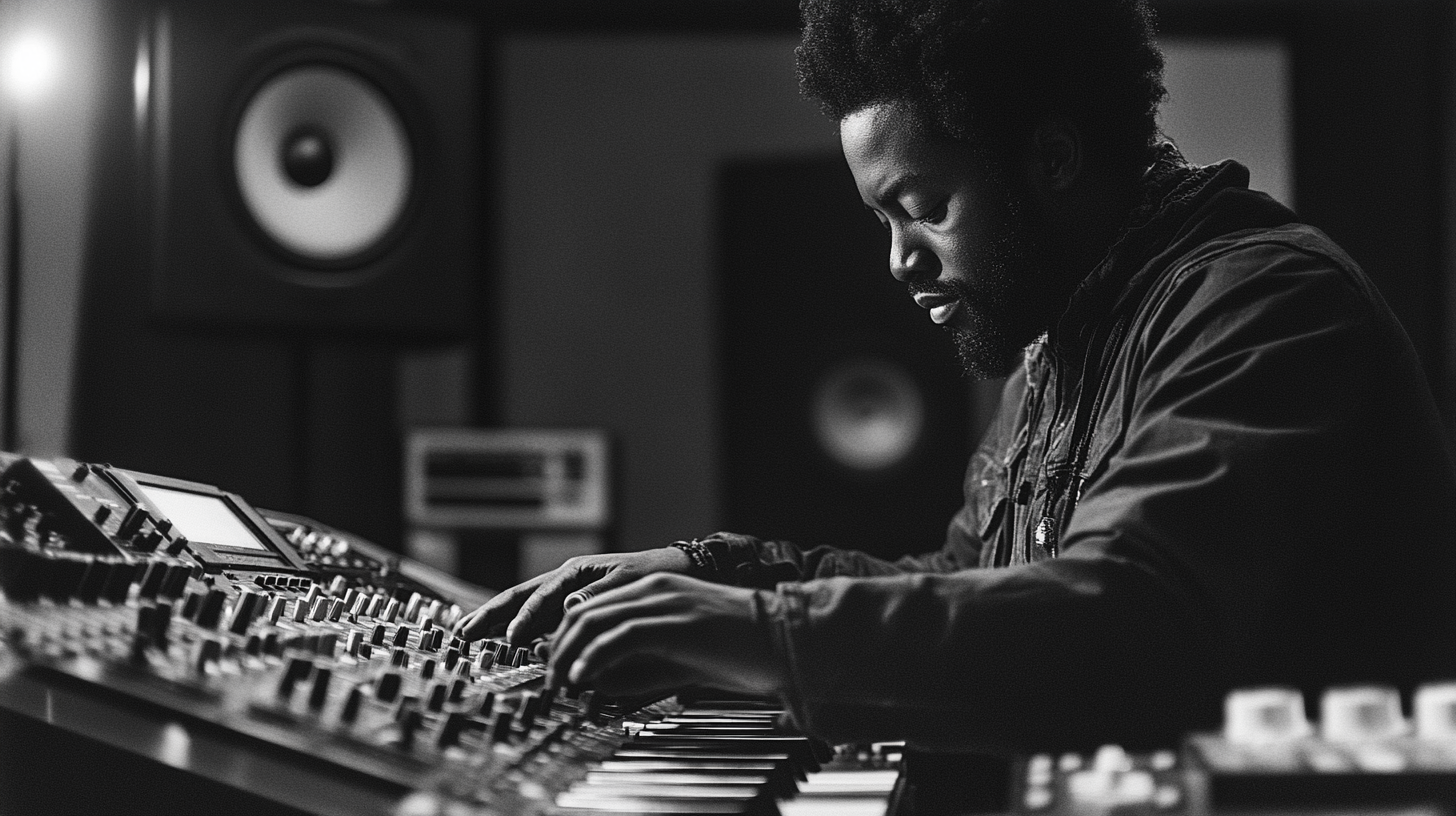
In his conversation on my podcast, Mel Lennon speaks candidly about the limiting narratives imposed on Black artists: “We don’t need to be a violent group of people that they make us out to be, or dumb group of people that they make us out to be, or low brow type of people that they make us out to be.”
The “they” in this statement points to the structural powers that have historically controlled how Black musicianship is presented and marketed. From the segregated “race records” of early 20th century recording to the contemporary streaming algorithms that automatically categorise Black artists into urban genres regardless of their sound, the industry has consistently applied reductive labels to Black creativity.
These constraints manifest in practical career limitations. Consider the case of Beyoncé’s Country-influenced album “Cowboy Carter.” Despite country music’s roots in Black musical traditions (the banjo itself is an instrument of African origin), Beyoncé’s entry into the genre was treated as a surprising crossover rather than a reclamation of Black cultural heritage. Her song “Texas Hold ‘Em” was initially rejected by some country radio stations despite its clear genre alignment – a rejection that speaks to the persistent policing of Black artistry.
Similarly, artists like Lil Nas X initially struggled to get “Old Town Road” listed on Country charts despite its obvious country elements. The message is clear: Black artists are expected to stay in their prescribed lanes, with “urban” categories serving as both ghetto and showcase.
Pop as Liberation: Reclaiming Musical Freedom
Against this backdrop of pigeonholing, Lennon’s insistence on defining his music as pop and not R&B takes on political dimensions: “I love calling it pop music, because that’s what I loved growing up.”
This statement reveals the double-edged nature of pop as a category. On one hand, pop can function as a neutral space, free from the racial coding that accompanies genres like hip-hop, R&B, or even “urban” (a term that serves as industry code for “Black”). On the other hand, pop has historically been associated with whiteness, with Black artists often needing to “cross over” to be considered pop regardless of their sound or commercial success.
The history of Black artists claiming pop as their territory is rich and complex. Michael Jackson’s transformation from soul/R&B star to “King of Pop” represented one of the most successful assertions of genre-transcending Black artistry. Janet Jackson, Whitney Houston, and Prince similarly challenged simple categorisation throughout their careers, though not without facing industry resistance.
More recently, artists like Tyler, the Creator have explicitly rejected genre limitations. Upon winning “Best Rap Album” at the 2020 Grammy Awards, Tyler noted: “It sucks that whenever we—and I mean guys that look like me—do anything that’s genre-bending or that’s anything, they always put it in a ‘rap’ or ‘urban’ category… I don’t like that ‘urban’ word. To me, it’s just a politically correct way to say the n-word.“
Missy the Innovator: Celebration Amid Substance
When asked about musical influences, Lennon immediately references Missy Elliott, praising how her music balances profound messages with irresistible energy: “When you look back at Missy Elliott and her music… sometimes you might lose it as just some dance music. But there are moments and a lot of her music that actually say something, a social commentary.”
This observation cuts to the heart of another aspect of Black musical innovation: the ability to embed social critique within celebratory forms. From the coded resistance in slave spirituals to the political consciousness within funk’s infectious rhythms, Black musical traditions have long understood that joy and critique can—indeed must—coexist.
Missy Elliott’s career exemplifies this synthesis. Take “Work It,” ostensibly a club banger about sexual confidence. Beyond its infectious beat lies a radical assertion of female sexual agency and control, challenging the male gaze dominant in early 2000s hip-hop. Or consider “She’s a Bitch,” which reclaims a gendered slur while demanding respect in the male-dominated music industry.
Visually, Missy’s work was equally revolutionary. Her futuristic aesthetics rejected the hypersexualised presentation expected of female rappers in favour of avant-garde fashion and surrealist imagery. As scholar Aisha Durham notes, Missy’s visual presentation challenged “the historical fixation on the Black female body as a site of spectacle and exploitation.”
What makes Elliott particularly relevant to Lennon’s project is her genre fluidity. Throughout her career, she has moved between hip-hop, R&B, dance, and pop without being confined to any single category. This versatility—what musicologist Jason King calls her “genre promiscuity”—allowed her to define her artistic identity on her own terms rather than accepting externally imposed limitations.
Self-Definition as Revolutionary Act
Throughout his conversation, Lennon returns repeatedly to themes of self-definition and authenticity. From his stage name (a clever pun on “melanin”) to his genre classification, from his fashion choices to his lyrics, he presents himself as someone actively defining his identity rather than passively accepting external labels.
This isn’t just abstract theory but practical strategy. By refusing simple categorisation, by embracing complexity and contradiction, by asserting his uniqueness while acknowledging his community, Lennon creates space for artistic expression beyond stereotypes.
As we listen to Lennon and artists like him, perhaps our task isn’t to place them in familiar boxes but to receive their work on its own terms—to hear what they’re saying rather than what we expect them to say. That receptivity might be the first step toward a musical landscape where innovation is recognised at its source, where artists can be both exceptional and representative, both entertaining and profound.
In Lennon’s words: “You know, just love it.”
Links
Find the podcast on Apple, Spotify, or wherever you get your podcasts.
Follow us on Instagram, TikTok, and Facebook.
And don’t forget to check out the official podcast playlist on Spotify.
Leave a Reply