
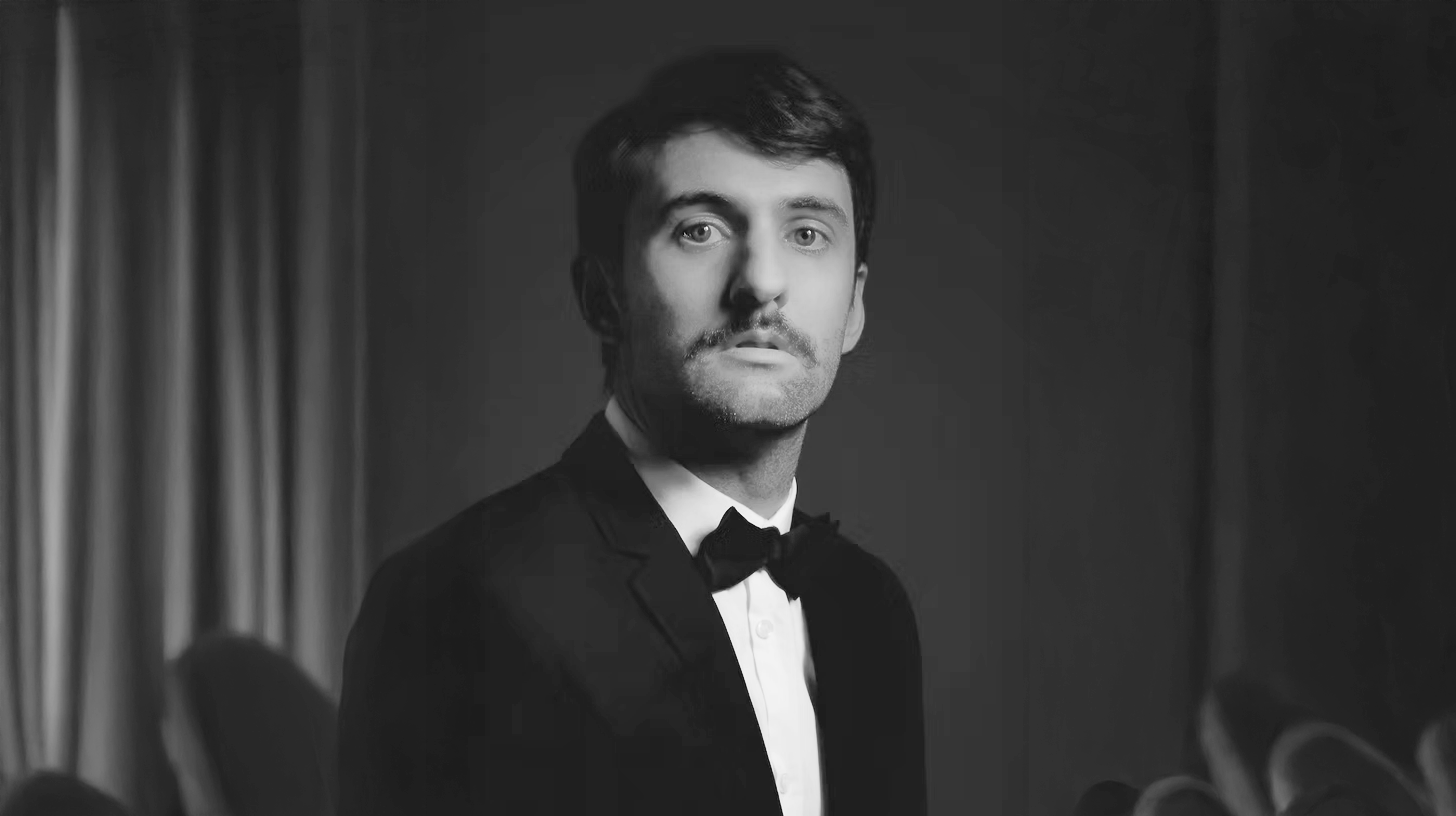
When ‘In the Key of Q’ host Dan Hall asks Minute Taker’s Ben McGarvey about his thoughts on the album format, there’s a reverence in McGarvey’s response that feels almost elegiac. “I’m very, very much an album person,” he states. “When I’m making my own albums, I literally make them for vinyl. I’m thinking about what is side A, what’s side B, what’s going to be the opening closing song on each side.”
This deliberate approach to sequencing music feels increasingly countercultural in an age where Spotify’s Daniel Ek encourages artists to “put the music out all the time,” where attention spans reportedly shrink, and where the algorithm rather than the artist often determines what we hear next. Yet McGarvey’s commitment to the album as cohesive statement represents something more than mere nostalgia—it speaks to a particular kind of artistic expression and reception that feels increasingly endangered.
The Rise and Fall of the Album Era
The album as we understand it emerged relatively recently in music history. While record albums existed in the early 20th century (literal albums of individual 78rpm records), it wasn’t until the development of 33⅓ rpm vinyl in the late 1940s that the album became feasible as an artistic unit rather than simply a collection of songs.
The “album era” proper—where artists conceived of their work primarily in album-length statements—arguably began in the 1960s with landmarks like The Beatles’ Sgt. Pepper’s Lonely Hearts Club Band, the Beach Boys’ Pet Sounds, and Pink Floyd’s Dark Side of the Moon. These works weren’t simply collections of discrete tracks but conceptually unified wholes where sequencing, thematic development, and the relationship between songs mattered deeply.
This approach dominated popular music into the early 2000s, when digital distribution and the iTunes Store popularized the single-track purchase, effectively unbundling the album. By 2015, streaming had supplanted downloading, further fragmenting listening habits. As Pitchfork critic Jeremy D. Larson observed, “Streaming services rely on playlists that cut songs away from their native bodies and place them in these algorithmic sequences.”
The statistics are stark: according to a 2019 Deezer study, only 15% of listeners under 25 typically listen to albums all the way through, compared to 59% of those over 45. In streaming economics, an album simply represents a larger collection of individually monetizable tracks rather than a cohesive artistic statement.
Why Albums Still Matter
Despite these trends, McGarvey’s approach reveals why the album format remains artistically significant. His focus on the constraints of vinyl—the need for balanced sides, the limitation of 40-45 minutes, the conscious decision about what opens and closes each side—creates a deliberate structure that shapes the listener’s experience in ways that randomly queued tracks cannot.
McGarvey particularly values “single albums” (those fitting on a single vinyl) over the sprawling double albums that became more common in the CD era. “I think there’s something really nice about picking 40 to 45 minutes worth of music that just works really well as two sides,” he explains, pointing to how these constraints force artistic discipline.
This observation echoes what many creators know intuitively: artistic limitations often breed creativity. The need to distill expression into a particular format—whether a sonnet, a three-minute pop song, or a 40-minute album—requires intention and care. It’s precisely this structured approach that allows for deeper artistic statements and more complete emotional journeys.
The Queer Connection to Album Culture
For queer listeners in particular, the album has historically offered something beyond individual songs: sanctuary. In an era before streaming, physically purchasing and owning albums by artists who spoke to queer experience—whether explicitly or in coded language—created private spaces for identity exploration.
Cultural theorist Wayne Koestenbaum has written extensively about how gay men in particular have historically connected with album-length works, especially in opera and musical theater, but also in the pop album format. These extended musical narratives, he argues, provided “alternative world[s]” for exploring emotions and identities that mainstream society rejected.
This connection feels present in McGarvey’s audiovisual project exploring “the inner worlds of gay men at different points in time” through the “Wallflowers” album. By creating a conceptual work where each song explores a different historical period—from World War I through the AIDS crisis—he uses the album format to construct a larger narrative about queer experience across time. This ambitious approach would be impossible through individual, disconnected singles.
Physical Objects in a Digital World
While streaming dominates consumption, vinyl sales have increased for 16 consecutive years in the UK, with 2022 showing the highest sales since 1990. This seemingly contradictory trend suggests a hunger for more tangible, intentional musical experiences alongside the convenience of streaming.
The resurgence speaks to what sociologist Sherry Turkle calls “evocative objects”—physical things that carry emotional and intellectual significance beyond their utilitarian purpose. Albums as physical artifacts encourage different relationships with music: the deliberate act of selecting a record, the commitment to a side’s worth of music, the engagement with cover art and liner notes.
For McGarvey, who “literally make[s]” albums for vinyl, this physical dimension clearly matters. When discussing his Secret Songs subscription series, he emphasizes how these “homemade albums” create direct connections with listeners who commit to experiencing his work as complete statements rather than algorithmically sorted tracks.
The Future of Musical Narratives
The question isn’t whether streaming will continue dominating music consumption—it almost certainly will—but rather what artistic forms will persist or emerge in response. The album, in its traditional 40-minute form, may become increasingly niche, but the human desire for extended narrative experiences seems unlikely to disappear.
We might see what music journalist Marc Hogan calls “format divergence”—artists releasing both algorithm-friendly singles and more ambitious album projects for different contexts. Others may explore new formats entirely, creating works designed specifically for digital contexts while preserving the album’s sequential storytelling aspects.
For listeners who value deeper engagement, the album—whether experienced through streaming, vinyl, or formats yet to emerge—offers something increasingly rare: a space for sustained attention in a fragmented world. McGarvey’s approach reminds us that despite technological changes, the fundamental human connection to structured musical narratives remains powerful.
When he discusses creating his upcoming album “The Oblivion,” describing it as “quite a dark 80s inspired album…quite cinematic, inspired particularly by Blade Runner,” McGarvey reveals an artistic vision that transcends individual tracks. He’s crafting a world to be entered and experienced completely—a forty-minute journey through sound and emotion that tells a larger story than any individual song could convey alone.
In a culture increasingly defined by fragments, such intentional artistic statements feel not just valuable but necessary—preserving an approach to music that prioritizes depth over convenience, and artistic vision over algorithmic curation.
Listen to Minute Taker’s episode HERE.
Minute Taker’s official website can be found HERE.
Find the podcast on Apple, Spotify, or wherever you get your podcasts.
Follow us on Instagram, TikTok, and Facebook.
And don’t forget to check out the official podcast playlist on Spotify.
Leave a Reply