
The Counter-Narrative
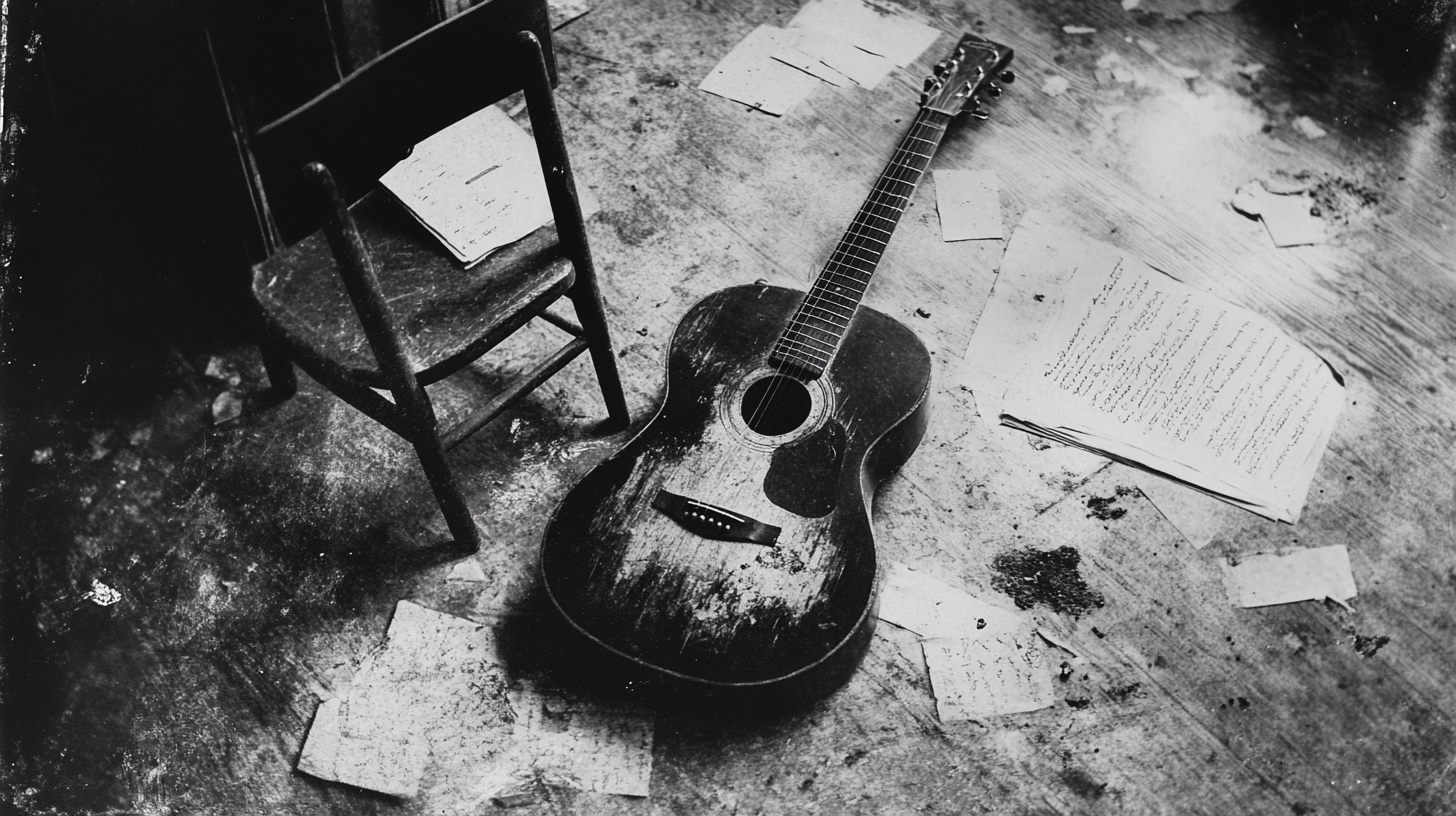
When asked whether he fits the stereotypical image of a queer musician, Eric Terino’s response during his In the Key of Q interview speaks volumes. The “glitter balls and six packs” that dominate popular perceptions of queer artistry couldn’t be further from his DIY Folk aesthetic—rooted in what he describes as “earthiness, textures… naturalism rather than that kind of gloss.”
That contrast illuminates a broader truth: despite increased LGBTQ+ visibility in pop culture, our representation remains remarkably narrow. The queer artists who garner mainstream recognition tend to fit specific moulds—glossy pop stars with dance-friendly anthems, outré personalities who embody a kind of palatable otherness, or social media-savvy personalities with carefully curated presences.
Meanwhile, Folk music—with its emphasis on storytelling, tradition, and “home-craftedness”—offers a dramatically different space for queer expression. One that often operates below the radar of mainstream culture, but may speak more directly to the lived experiences of many in our community.
Folk’s Queer Ancestry
Though rarely acknowledged in mainstream histories, Folk music has long harboured queer voices. From Jean Ritchie’s subtle subversions of gender expectations to Patrick Haggerty’s groundbreaking 1973 album “Lavender Country” (widely considered the first openly gay Country record), the genre has provided space for counter-narratives long before visibility was fashionable.
What makes Folk particularly suited for queer storytelling? According to Eric, it’s fundamentally “a storytelling medium” and one that exists “independently of a system.” These qualities make it naturally aligned with perspectives that challenge dominant narratives—particularly those of people whose identities place them outside conventional systems.
Folk arts have long served as vehicles for narratives that couldn’t be expressed openly. For queer artists like Eric, Folk continues this tradition—providing a medium not just for self-expression, but for the preservation and transmission of queer experiences often omitted from mainstream culture.
The Politics of Visibility
There’s something paradoxical about queer Folk music’s position in contemporary culture. While LGBTQ+ representation in mainstream media has increased dramatically, it’s largely confined to particular aesthetics and narratives—ones that often emphasise either aspirational glamour or performative trauma. I do feel that we as a queer culture often confuse and blur “I will be what I want to be” with “I will perform as a clown for straight audiences”.
As Eric observes: “I don’t know how accepted we are as queer people. I feel that we’re accepted if we’re entertaining or if we’re beautiful. But actually, if we have complexities such as relationship failures or dysfunctionality in some way, then we are very quickly and maybe more easily discarded.”
Folk music offers a deliberate counter-narrative to this glossy representational politics. Its emphasis on storytelling creates space for nuance, complexity, and the kind of messy lived experiences that rarely make it onto Pride floats or into corporate campaigns.
This isn’t to suggest a hierarchy of authenticity—there’s no more or less “real” way to be queer. But the relative invisibility of Folk and other less commercial genres in queer representation speaks to broader questions about which LGBTQ+ voices get amplified and why.
DIY as Resistance
Central to Folk’s ethos is what Eric calls its “home-craftedness”—its existence outside commercial systems and industry standards. This DIY approach has particular resonance for queer artists who have historically been excluded from mainstream music industries.
When major labels and radio stations showed little interest in LGBTQ+ perspectives, queer musicians often turned to independent production and community-based distribution networks. The result was music that, by necessity, embodied Folk’s participatory ethos—created by and for communities rather than commercial markets.
This tradition continues today. Even as some queer artists achieve mainstream success, many others—particularly those whose identities, aesthetics, or messages don’t align with marketable narratives—continue working in underground spaces.
Ambiguity vs. Authenticity
One of the most powerful elements of Eric’s approach is his refusal to obscure his queer perspective for mainstream palatability. As he explains: “I never wanted anything to be veiled in ambiguity, purposefully, for the sake of making it palatable to somebody who is uncomfortable with an LGBTQ perspective.”
This stands in contrast to a long history of queer coding in popular music, where artists hint at same-sex desire through carefully calibrated ambiguity—allowing straight audiences to miss subtext while queer listeners recognize themselves. Even one of my favourite queer songs, Erasure’s “Hideaway”, uses coded language make its point about coming out. If you weren’t looking for scraps, you’d never spot the crumbs.
Such coded expression served vital purposes in eras when explicit representation carried severe consequences. But as Eric suggests, continuing this practice in more accepting contexts raises questions about who benefits: “Just because you aren’t necessarily a great example of a queer hero doesn’t mean that you can’t be a musical hero or Folk hero. There’s lots of categories that you can fit into.”
Folk’s emphasis on authenticity and storytelling makes it particularly well-suited for moving beyond these coded traditions toward more explicit representation. Its lyrical focus creates space for narrative specificity that pop’s abstraction often avoids, while its indie infrastructure can accommodate perspectives that commercial gatekeepers might reject.
Making Space for Complexity
Perhaps what’s most radical about queer Folk music is its embrace of complexity—both emotional and structural. While mainstream queer representation often flattens LGBTQ+ experiences into either celebration or tragedy, Folk’s storytelling tradition makes room for ambivalence, contradiction, and the full spectrum of human experience.
Eric’s music exemplifies this approach. Songs like “A Snowfall at Dusk” from his latest album explore isolation and lost love, culminating in the line: “Maybe tonight I will survive the storm. My heart moves through. If only I could love myself the way I once loved you.”
This emotional complexity extends to identity itself. For Eric, being queer and being an artist have always been intertwined: “I’ve always been unusual in one way or the other. And I think a lot of that has to do with being an artist… I think a lot of what my family and friends saw in me was ‘he’s different somehow.’’”
Rather than separating these aspects of himself—the queer, the artistic, the mental health challenges—his music integrates them into a coherent whole that defies simple categorization.
The Road Forward
As LGBTQ+ representation continues evolving, Folk and other indie genres offer vital alternatives to mainstream narratives. They create space not just for more diverse voices, but for more complex stories—ones that might be too nuanced, too personal, or too challenging for commercial platforms.
Eric’s approach suggests a way forward that neither rejects visibility nor accepts its limitations. Instead, it carves out alternative spaces where queer artists can tell their stories on their own terms—building communities around shared experiences rather than marketable identities.
This isn’t a rejection of pop’s glittering visibility politics, but a necessary complement to it—ensuring our community’s representation reflects not just how we dance, but how we tell our stories.
Listen to Eric’s episode here.
Find the podcast on Apple, Spotify, or wherever you get your podcasts.
Follow us on Instagram, TikTok, and Facebook.
And don’t forget to check out the official podcast playlist on Spotify.
Leave a Reply